CK44 Hub News
Crypto and USDT Deposits in Bangladesh: An Honest Look
Payments · By Michael Max · June 7, 2026
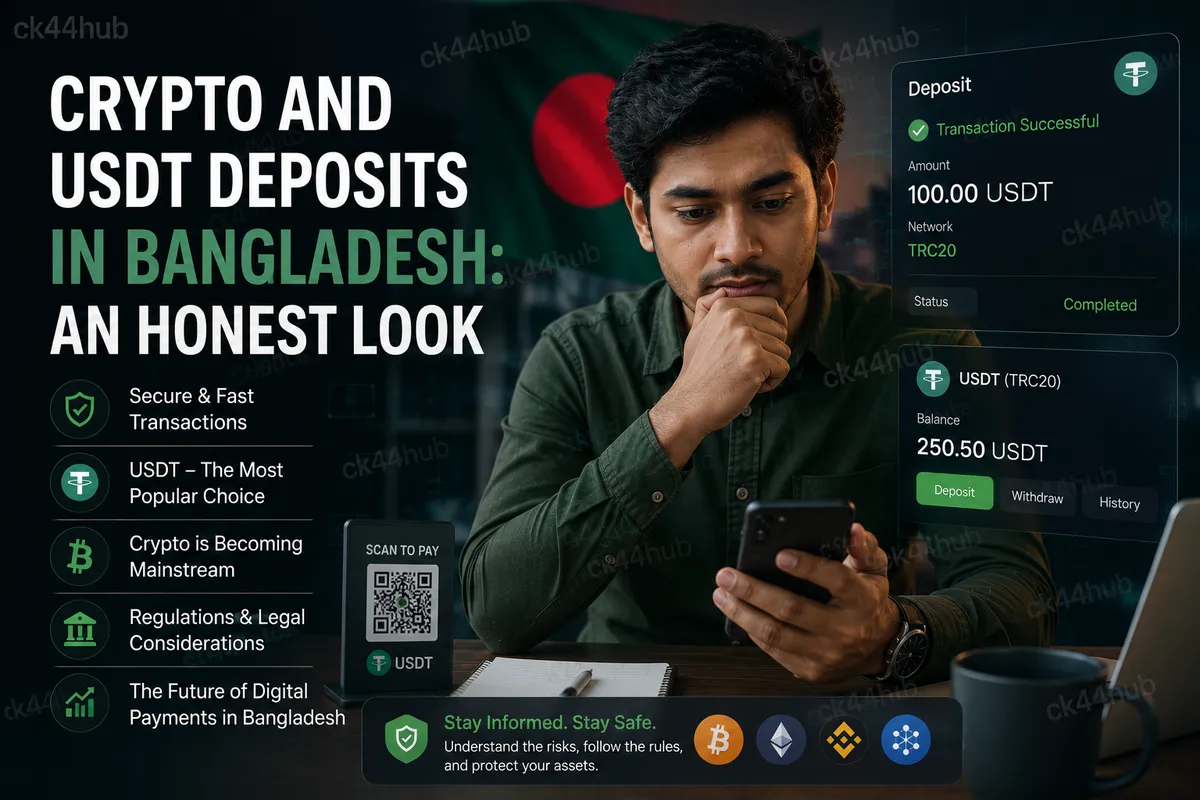
As mobile wallet monitoring tightens, more Bangladesh players are looking at crypto, and USDT in particular, as a deposit route, with reports describing crypto adoption climbing quickly quarter on quarter. The honest answer is not that USDT is automatically safer or legal. It is a different payment method with different risks. USDT can reduce some mobile-wallet friction because it does not move through the same bKash or Nagad flow, but it adds new problems: exchange access, wrong-network mistakes, private-key security, conversion, and a learning curve that punishes beginners. For most casual players, a familiar wallet used with discipline is easier and safer than a confusing new rail. This guide compares USDT and bKash on speed, fees, privacy, and monitoring exposure, explains why crypto is not the invisible money some claim, and sets out who it actually suits, marking exchange-specific or fee details as unconfirmed where verified numbers are not available. It does not pretend crypto makes a legally sensitive activity safe.
Wednesday night. 2:04 AM. Shahriar, 30, an IT-support freelancer in Bashundhara R/A, was on a video call with his older cousin Imran, who runs a small electronics shop in Stadium Market. Shahriar kept saying USDT was cleaner, faster, and less tied to bKash monitoring. Imran did not trust it. He had seen people lose phone access, send money to the wrong wallet, or freeze at a confusing exchange screen. The call turned into a familiar argument: younger tech user versus older cash-flow realist. Shahriar cared about privacy and speed; Imran cared about not losing money before it even reached an account. Both had a point. Crypto can be useful for players who already understand wallet security, and a bad idea for beginners who only want a quick deposit during a match night. This article lays out both sides without pretending USDT is magic.
Why Are Players Looking at USDT?
The interest is strongest among users who feel squeezed by mobile-wallet review. They do not necessarily want crypto as an investment; they want a deposit rail that feels less tied to a personal bKash or Nagad account. USDT, a dollar-pegged stablecoin, is the usual choice, often on the TRC20 network.
The appeal is easy to understand. A player worried about wallet flags may see USDT as a route outside the normal mobile-money rails. Reports describe crypto adoption among Bangladesh players rising sharply, with crypto deposits often processing within roughly ten to thirty minutes. For users who already understand crypto, that can feel cleaner than repeated wallet transfers. For users who do not, it can feel like stepping into a foreign banking system with no local branch to visit when something goes wrong. Background reading from Tether and market data on CoinGecko helps before treating USDT as a simple fix.
How Does USDT Compare to bKash on Speed and Fees?
Speed should be measured end to end, not just from wallet send to platform credit. A player first needs taka converted into USDT, then must send it correctly, then wait for confirmations. If any step is confusing, the real experience can be slower than a familiar wallet, even if the blockchain transfer itself is quick.
bKash wins on familiarity, since most players already know how to cash in, send, and check status, and it leads deposits by a wide margin. USDT wins for players who understand the route, because it avoids using a personal wallet as the casino payment rail. But it introduces steps: buying the token, choosing the correct network, copying the exact address, checking minimums, and waiting for confirmations. The table below compares the two honestly; exchange-specific fees are not fixed and should be confirmed live.
| Factor | USDT (TRC20) | bKash |
|---|---|---|
| Familiarity | Low for most players | High for most players |
| Deposit speed | Often ~10-30 min, plus conversion steps | Fast and familiar |
| Fees | Vary by exchange and network (confirm live) | Vary by usage (confirm live) |
| Privacy | Different from wallet trail, not anonymous | Wallet trail visible to provider |
| Monitoring exposure | Lower direct wallet-monitor risk, not zero legal risk | Higher wallet-monitor risk |
| Mistake recovery | Often permanent and unrecoverable | Some support route exists |
| Best for | Crypto-comfortable users | Beginners and casual users |
Does USDT Bypass Bangladesh’s Payment Monitoring?
USDT may change the monitoring route, but it does not make a player invisible. It can avoid a direct wallet-to-casino pattern, yet exchange records, platform records, and blockchain data still exist. Treating crypto as a shield is a mistake; treating it as a different method with different risks is accurate.
This is the most misunderstood part. USDT is not invisible money. Blockchain transactions are recorded, exchanges keep account records, and platforms keep deposit histories. A player still needs to convert taka to USDT somewhere, and that entry point can create its own trail. Anyone claiming crypto is completely anonymous is not being serious. What USDT can do is change the payment surface, which matters if the main concern is wallet review, but the broader questions remain: is the activity legal, is the platform trustworthy, and can the funds be explained. See our mobile wallet monitoring explainer for the wallet side, and Bangladesh Bank for official context.
Who Should Use USDT, and Who Should Wait?
USDT suits patient, crypto-literate users who test small amounts and accept wallet responsibility. Beginners, emotional bettors, shared-phone users, and anyone who cannot afford an irreversible mistake should wait and stick with a familiar method used carefully.
A suitable USDT user reads the cashier page twice, knows the difference between networks, and never sends during a heated match or after a loss. An unsuitable user wants instant action, stores passwords in screenshots, or asks a friend to handle the transfer. Crypto punishes small errors: a wrong network or a copied-address mistake can be permanent, with no support desk to reverse it. The better first step for most players is to improve payment discipline rather than add a technical rail. For payment context, read the CK44 payment notes and keep the basics from the CK44 responsible gaming guide in mind.
Frequently Asked Questions
Is USDT legal to use for casino deposits in Bangladesh?
This needs legal review and is not something this guide confirms. Online gambling itself is criminalised under the Cyber Security Ordinance 2025, and using crypto does not change that. Players are responsible for understanding local law before using any payment method.
How long does a USDT deposit take versus bKash?
Crypto deposits often process within roughly ten to thirty minutes, but the real time includes converting taka to USDT and waiting for confirmations. A familiar wallet can feel faster end to end for someone who does not already use crypto.
Are USDT casino deposits anonymous?
No. USDT may feel more private than a wallet, but blockchain records, exchange accounts, and platform histories can still create traceable information. Anyone claiming full anonymity is overselling it.
What happens if I send USDT to the wrong address or network?
It can be permanent and unrecoverable. Unlike a wallet support ticket, a wrong-network or wrong-address crypto transfer usually has no reversal path, which is why testing small amounts and double-checking details matter so much.
Should a beginner try USDT before getting comfortable with bKash?
No. Beginners should understand basic deposit discipline first. USDT adds network, address, fee, and wallet-security risks that can punish rushed users, so it is a poor first step.